
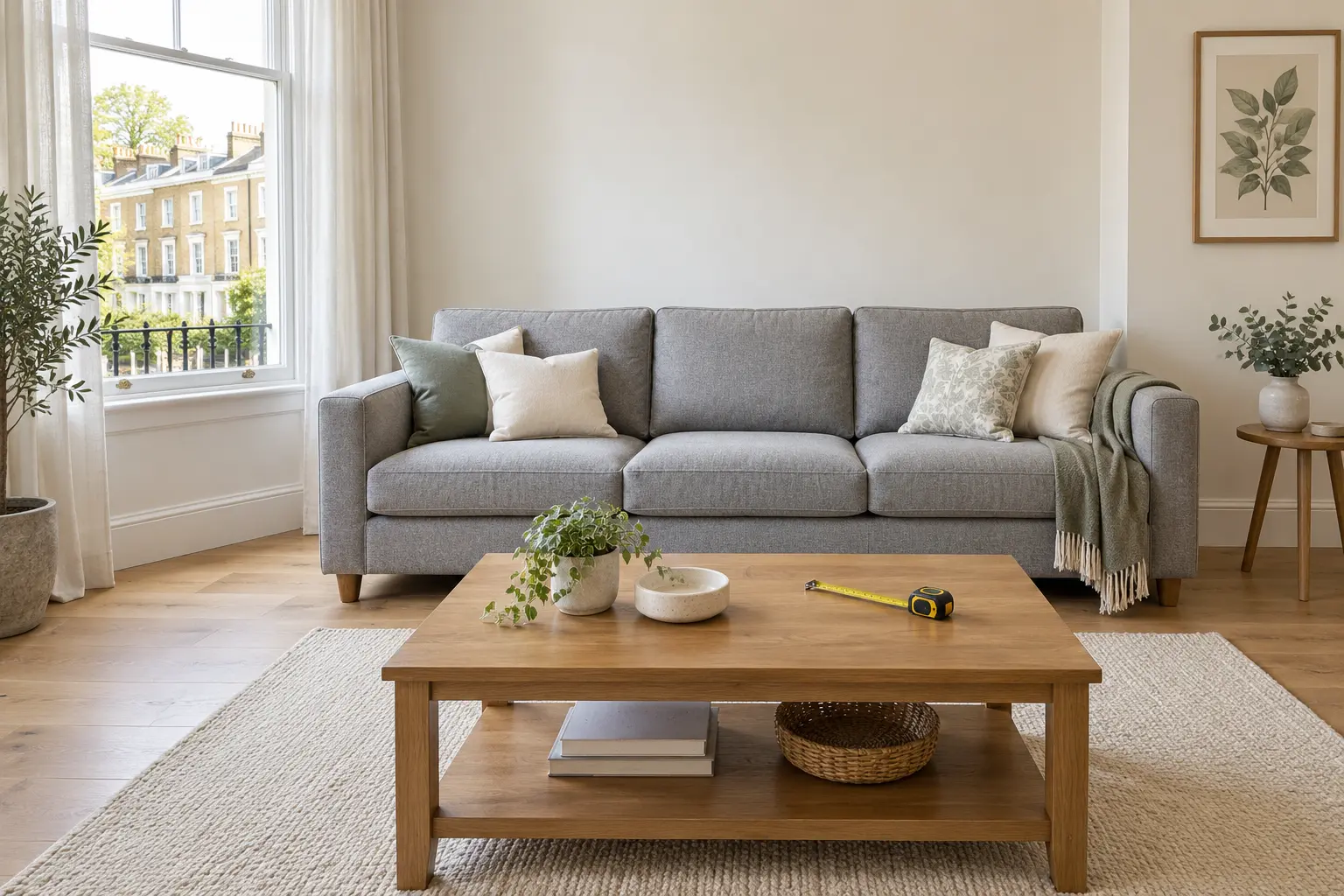
Sofa Sizes UK: Full 2-Seater, 3-Seater, Corner & Sofa Bed Dimensions in cm

Most people choose a sofa by how it looks in the photo.
Then it arrives.
Either it swallows the room, blocks a door, or — just as frustrating — it looks far too small against the wall it was bought for. Two adults end up squeezed onto what was sold as a three-seater, and nobody wants to sit in the middle.
That is why understanding sofa sizes UK dimensions matter before you order, not after the delivery driver is standing in your hallway. There is no single official size for a 2-seater or 3-seater in the UK, which catches a lot of buyers out. One brand’s 3-seater can be 190cm wide. Another’s can be 235cm. Both descriptions are technically correct.
For a range of styles and sizes to suit different living spaces, shop sofas at Climax Furniture and compare the dimensions before choosing the right fit for your home.
This guide breaks down the typical sizes in centimetres, what those numbers actually mean in a real room, and the measurements most people forget to check.
Quick Reference: Typical UK Sofa Sizes
Use this as a starting point, not a guarantee. Always check the exact product dimensions before buying.
| Sofa type | Typical width | Typical depth | Typical height |
| Small 2-seater | 120–150cm | 80–95cm | 75–95cm |
| Standard 2-seater | 150–180cm | 85–100cm | 75–95cm |
| Standard 3-seater | 180–220cm | 85–100cm | 75–95cm |
| Large 3-seater / 4-seater | 220–250cm+ | 90–105cm | 80–100cm |
| Small corner sofa | 190–220cm long side | 140–170cm short side | 75–95cm |
| Standard corner sofa | 210–280cm long side | 190–230cm short side | 75–95cm |
| 2-seater sofa bed (closed) | 140–180cm | 85–100cm | 75–95cm |
| 3-seater sofa bed (closed) | 180–220cm | 90–100cm | 80–95cm |
Depth is measured from the front of the arm to the very back of the frame. Height is to the top of the back cushions. Those extra few centimetres matter more than people realise, especially in smaller UK living rooms.
Why There Is No Standard Sofa Size
This is where many people make their first mistake.
They assume “2-seater” means a fixed width, in the same way a double bed is broadly 135cm wide. Sofas do not work like that. Manufacturers decide their own proportions based on arm width, cushion style and the look they are aiming for.
A slim, modern 2-seater with narrow arms might be 145cm wide but still have 120cm of actual seating space. A traditional rolled-arm design could be 180cm wide and offer almost exactly the same room to sit on. The outside measurement looks generous. The inside tells a different story.
In practice, check three measurements together:
Overall width – will it fit the wall and get through the door?
Seat width – the space between the arms, which is how much room you really get.
Seat depth – measured from the front of the seat cushion to the back cushion.
If you only look at the first number, you will often be disappointed.
How to Measure Your Room Properly
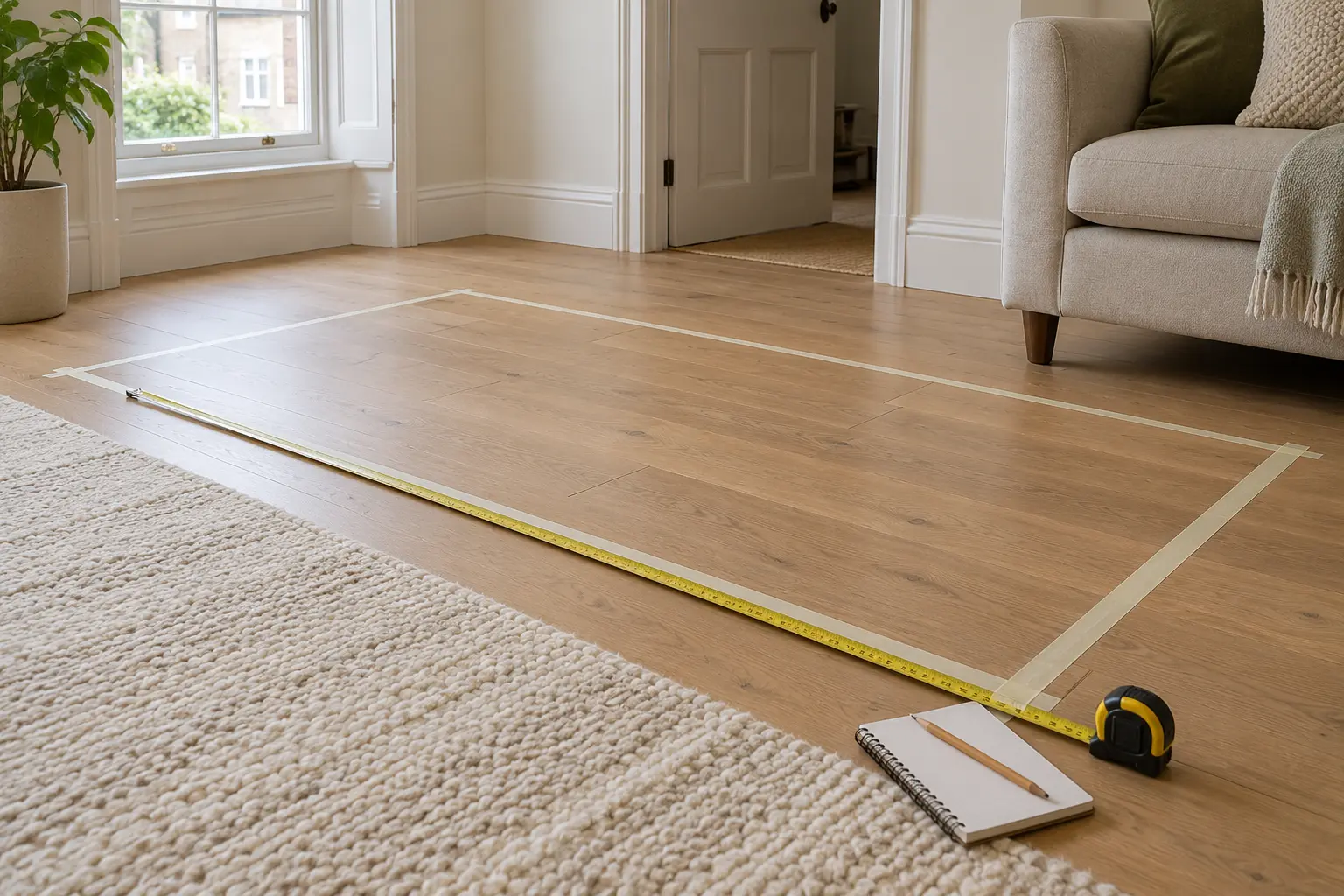
Start with the wall where the sofa will go, but do not stop there.
Measure the full width available, then subtract space for anything that cannot move: radiators, skirting, door swing, sockets you need to reach, and walkways. A sofa that fits on paper can still make a room feel awkward if it leaves only 30cm to squeeze past it to the kitchen.
A simple trick that works better than visualising numbers is to mark the footprint on the floor with masking tape. Put down the exact width and depth. Leave it there for a few hours if you can. Walk around it. Open doors. See how it affects the route through the room.
What most people overlook is the space in front of the sofa. Allow roughly:
- 45–60cm between the sofa and a coffee table
- 75–90cm for a comfortable walkway where people pass regularly
- Extra room if you have a recliner or a sofa bed that opens out
Another factor worth considering is proportion. In a long, narrow room, a deep sofa of 100cm can feel bulky even if it is not particularly wide. In a larger open-plan space, a small 2-seater can look lost and leave the seating area feeling unfinished. Size is not just about fitting. It is about balance.
Before choosing a sofa, measure your living room, doorways and hallways carefully. For more practical advice, see this independent sofa buying guide from Which?
2-Seater Sofa Dimensions
A standard UK 2-seater is usually 150–180cm wide, 85–100cm deep and 75–95cm high. Small apartment models start at around 120cm wide, while larger, more padded designs can reach 190cm.
Seat height is typically 45–50cm and seat depth 55–60cm.
That range is wide for a reason. A 135cm loveseat is really a comfortable chair-and-a-half for two people who do not mind sitting close. It works well in a flat, a spare room or as a second sofa. It is less ideal as the main sofa for two adults watching a film every evening.
For a compact option that follows these proportions, see the Dylan 2 Seater Sofa and check its product dimensions before ordering.
A 170cm 2-seater is usually the sweet spot for couples. There is enough width to sit without your elbows constantly meeting, and you can still stretch out if the arms are not too thick.
Common mistakes? Buying a compact 2-seater for a family room because it “leaves more space”, then finding nobody chooses to sit on it. And the opposite — choosing a deep, high-backed model for a small room, where the height makes the ceiling feel lower and the depth eats into the floor space.
If the sofa is for a smaller living room, look for a width of 150–170cm, lower arms and a slightly shallower depth of 85–92cm. It will not make the room bigger, but it will stop the sofa dominating every sightline.
3-Seater Sofa Dimensions
A standard UK 3-seater is usually 180–220cm wide, 85–100cm deep and 75–95cm high. A large 3-seater or a model sold as a 4-seater often starts at 220cm and can go beyond 250cm.
Here is the uncomfortable truth: not every 3-seater comfortably seats three adults.
If the internal seat width is under about 160cm, three people will fit, but only in the short-term, shoulder-to-shoulder sense. For regular use by three adults, look for an overall width closer to 200–220cm, giving each person roughly 60–65cm of seat space.
A good example to compare against is the Dylan 3 Seater Sofa, particularly when checking how a three-seater will fit along your available wall space.
In practice, many households use a 3-seater as a generous 2-seater. One person at each end, space in the middle, room to put your feet up sideways. That is completely fine — as long as you buy it with that expectation. Problems start when a family of four assumes a 190cm 3-seater plus one armchair will give relaxed seating for everyone on a Friday night. It probably will not.
Consider ceiling height and door position too. A 210cm sofa is not unusually large, but in a typical terrace where the living room is around 3.5m x 4m, it will take up most of one wall. Leave at least some visual breathing space at either end rather than pushing it tight between a fireplace and a door frame.
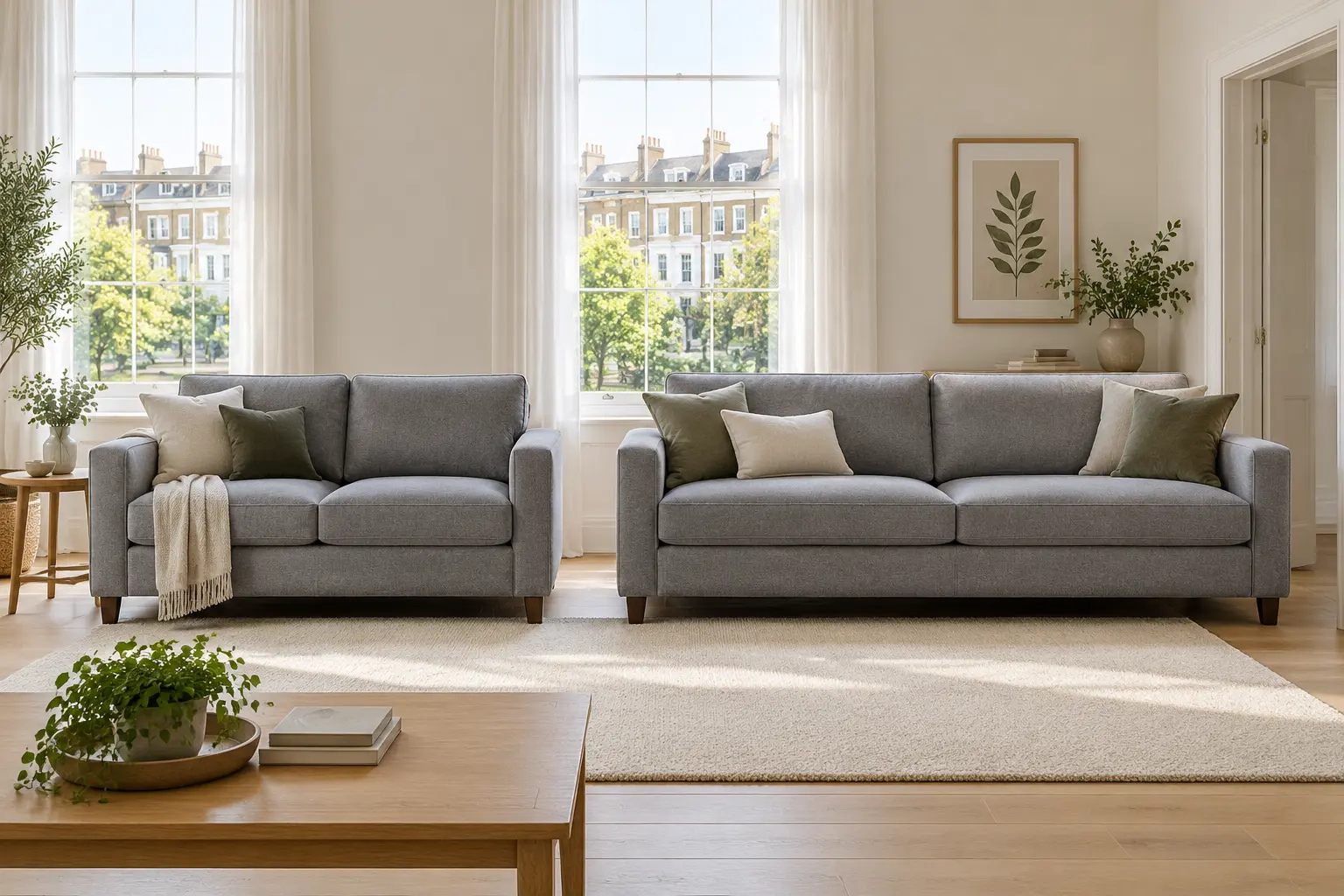
Corner Sofa Dimensions
Corner sofas vary more than any other type, so the headline “5-seater corner sofa” tells you very little on its own.
A small L-shaped corner might measure 200cm x 150cm, a balanced family corner is often around 212cm x 212cm or 230cm x 190cm, and larger designs can reach 280cm x 230cm or more. U-shaped sofas are bigger again, commonly 300cm wide or wider. Depth is usually 85–100cm and height 75–95cm.
When you read corner sofa dimensions, check which side is which. Left-hand facing and right-hand facing are usually described as you sit on the sofa, not as you look at it — but retailers do not all describe it the same way. Confirm it before ordering. Getting this wrong is one of the most expensive measuring mistakes because the chaise or return section ends up on the wrong side of the room, blocking a door or radiator.
Measure both walls, not just the main one. Then check if the shorter return does not cut across a walkway or make it impossible to open a sideboard or patio door. When comparing L-shaped designs, browse the available corner sofas to find a layout that suits your room.
What usually happens in real life is that people love how much seating a corner offers, but forget how much floor it permanently takes up. There is no flexible gap in the middle to move around, as there is with a 3-seater and a separate chair. A painter’s tape outline is especially useful here. Live with the L-shape on your floor for an evening and you will quickly know if it works.
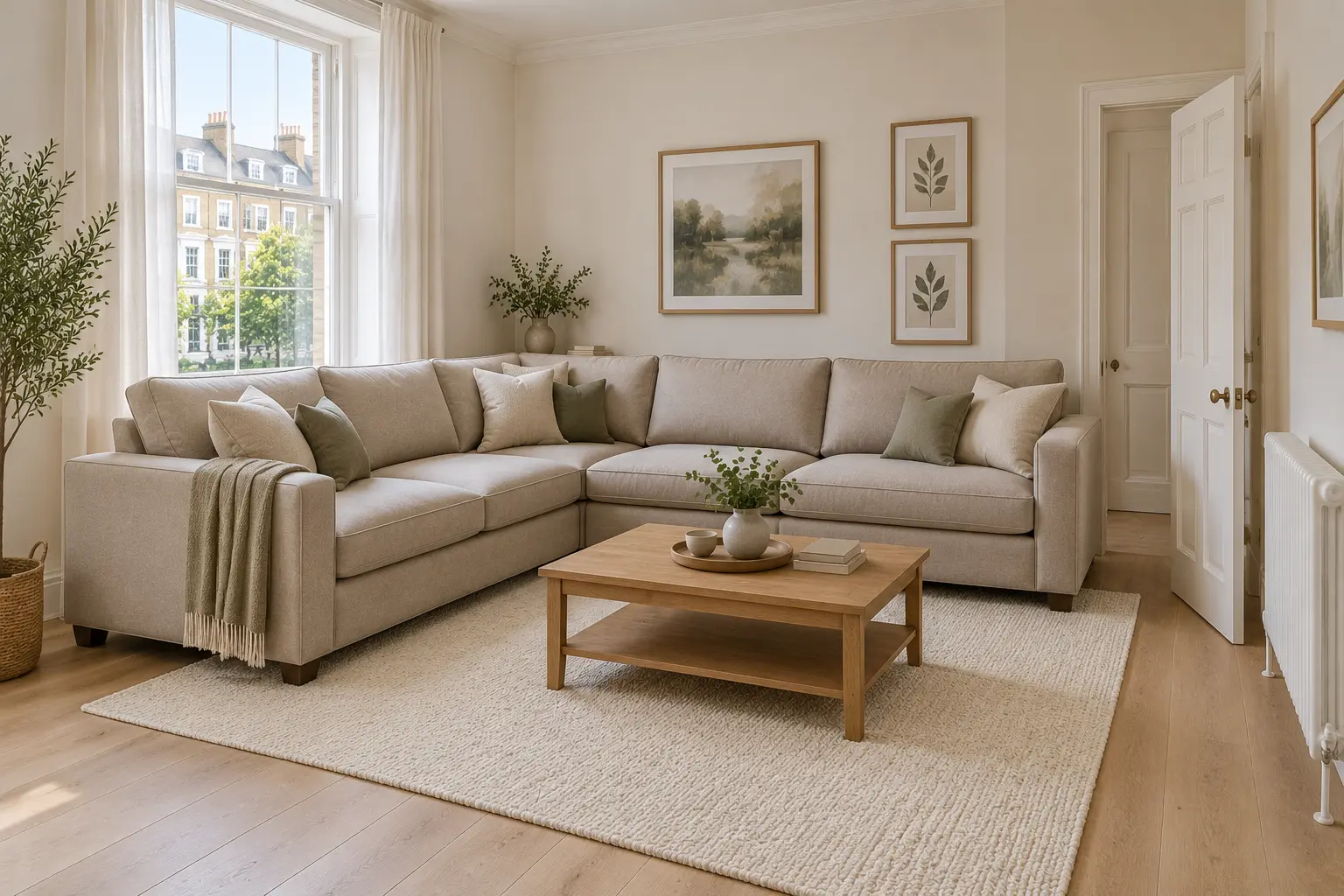
If your room is under about 4m x 4m, a compact corner can work, but a very deep model often will not. Look for a shorter return and slimmer arms.
Sofa Bed Dimensions
A sofa bed needs two sets of measurements: closed and open. Checking only the first is a classic error.
A 2-seater sofa bed is typically 140–180cm wide when closed, with a mattress around 115–120cm wide x 180–190cm long. That is narrower than a standard UK double bed (135cm wide), so it is best for one adult or two for a short stay.
If you need seating that can also accommodate overnight guests, explore the available sofa beds and compare their dimensions in both sofa and bed configurations.
For example, the Berlin 2 Seater Sofa Bed measures 150 cm wide × 82 cm deep × 92 cm high, so remember to check the additional floor space required when it is opened into a bed.
A 3-seater sofa bed is typically 180–220cm wide when closed. Its mattress is usually 135–160cm wide x 190cm long, which feels much closer to a proper double or, at the top end, a small king.
When open, most sofa beds extend to a total length of 210–230cm from the back of the sofa to the foot of the bed. Measure that space carefully. Include room to walk around the bed once it is open, and check that doors can still close — or at least that you are happy if they cannot for one night.
Mattress thickness also matters, although it is rarely listed as clearly as width. A thin 5–6cm fold-out mattress is fine for occasional guests. For regular use, look for a thicker mattress and a mechanism that does not leave a noticeable bar across your back.
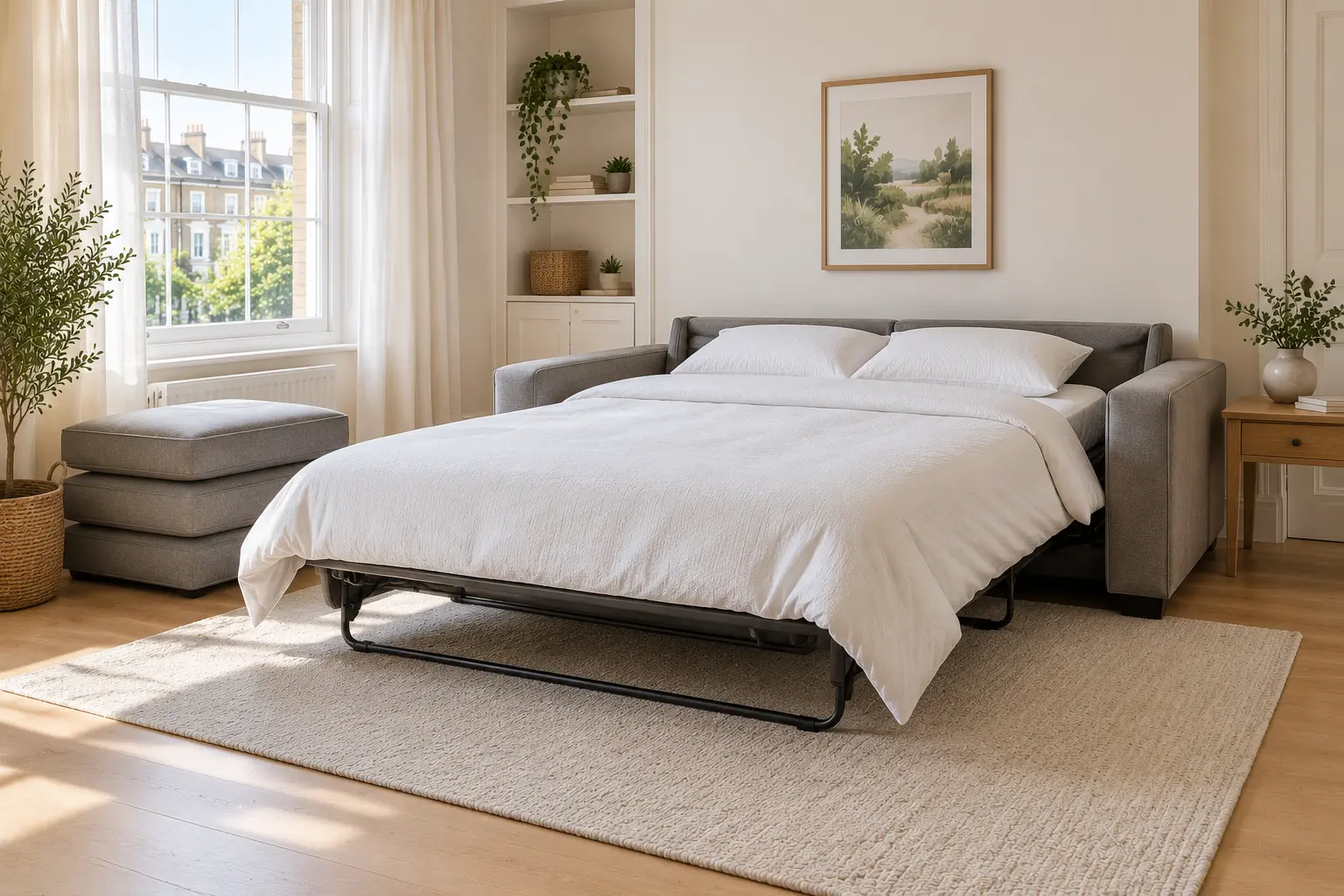
Do not overlook seat comfort either. Some sofa beds are excellent beds and rather firm sofas. If it will be your main daily sofa, sit on it as a sofa first. You will use that function far more often.
Seat Height, Depth and Comfort
Two sofas can share identical outside dimensions and feel completely different to sit on.
A seat height of 45–50cm suits most adults. Much lower and older visitors, or anyone with knee problems, may struggle to get up. Much higher and shorter legs will not rest comfortably on the floor.
Seat depth is just as personal. A depth of 55–58cm is comfortable for most people, allowing your back to reach the cushion while your feet stay down. Depths of 60cm and above feel luxurious for lounging and taller people, but can leave others perching on the edge with a cushion tucked behind them — exactly what many shorter buyers end up doing.
Arm height matters too, particularly if you like to lean or use the arm as a headrest when lying down. There is no perfect number here. It comes down to how you actually sit, not how the sofa is styled in a showroom photo.
Will It Fit Through the Door?
Delivery access is the part nobody gets excited about, and the part that causes the most panic on the day.
Standard UK internal doors are often around 76–78cm wide, with some older properties narrower still. That does not mean your sofa must be under 78cm wide. So as are delivered on their side, tilted, or with feet and sometimes arms removed. What matters is the smallest dimension of the sofa and the full route in.
Measure:
- Front and internal door widths and heights
- The narrowest point in the hallway
- Stair width, ceiling height and any tight turn
- Corners where the sofa needs to pivot
- Gates, porches and communal corridors in flats
Write the numbers down. Compare them with the packaged dimensions if they are available, not just the assembled size. If the route includes a sharp right angle straight after the front door — common in Victorian terraces — mention it when ordering. An experienced delivery team would rather know in advance than discover it with a 220cm sofa halfway in.
Frequently Asked Questions: Sofa Sizes UK Dimensions
What is the standard size of a 2-seater sofa in the UK?
There is no fixed standard, but most fall between 150cm and 180cm wide, 85–100cm deep and 75–95cm high. Compact models can be as narrow as 120cm.
What is the standard size of a 3-seater sofa in cm?
Most UK 3-seaters are 180–220cm wide, 85–100cm deep and 75–95cm high. For three adults to sit comfortably on a regular basis, a width of 200cm or more is usually better.
How big is a corner sofa for a small living room?
Look at small L-shaped models around 190–220cm on the longest side and 140–170cm on the return. Mark the full footprint on the floor first, as depth and the return section affect the room as much as width.
Is a 2-seater sofa bed big enough for two people?
For a night or two, usually yes. For longer stays, it can feel tight because the mattress is typically only 115–120cm wide, less than a standard double bed at 135cm wide. A 3-seater sofa bed gives noticeably more sleeping space.
How much space should I leave around a sofa?
Leave 45–60cm between a sofa and coffee table, and 75–90cm for a main walkway if space allows. Always allow extra clearance for recliners and sofa beds when they are fully extended.
Should I choose a 2-seater or 3-seater?
Choose based on internal seat width and how the sofa will be used daily, not just the room size. If two people want to stretch out every evening, a generous 2-seater or a 200cm 3-seater will be more comfortable than a compact 3-seater.
Conclusion
The right sofa size is not the biggest one you can fit through the door, or the smallest one that leaves the most floor visible. It is the one that gives you enough real seating space, leaves the room easy to move through, and still works when it is opened, reclined or used every single day.
Once you have your measurements, browse the full range at Climax Furniture and check the exact dimensions on each product page before you order.
Start with the quick dimensions above, then narrow it down. Measure the room, tape the footprint on the floor, check the seat width and depth, and measure the delivery route properly. Those ten minutes save a lot of hassle later.
Do that, and sofa sizes UK dimensions stop being a confusing list of numbers. They become a practical way to buy a sofa that fits your room — and the way you actually live in it.