
Start your content with your exact focus keyword:
How Much Should a Sofa Cost UK? Buying a new sofa is a big investment, but how much should you really spend in 2026? Whether you’re considering a £500, £1,000 or £2,000 sofa, this guide reveals what each budget gets you, how to spot quality and how to avoid overpaying. Ask ten people what a sofa should cost and you will get ten different answers. One person is delighted with theirs at under £400. Another insists anything below £1,500 is money wasted. Both can be right.
Sale prices rarely look like real prices, and two sofas that appear identical in photos can sit £800 apart. So how much should a sofa cost in the UK if you want a good one — comfortable, properly built, and still looking decent in five years?
There is no single correct figure. What matters is not the price tag on its own, but what that money is buying — the frame underneath, the filling inside the cushions, the fabric on the outside, the size of the thing, and how much is going on showrooms and middlemen rather than the sofa itself.
The short answer
For most UK households in 2026, a good everyday sofa starts at around £500. At that level you should expect a solid frame, deep-filled cushions and a fabric that copes with normal family life. Spend closer to £1,000 and you are usually not buying a magically better seat. You are buying more sofa: a full 3+2+1 set instead of one piece, a sofa bed mechanism, recliners, or leather instead of fabric. At £2,000, much of the extra tends to go on brand name, designer styling, premium leather and showroom overheads. Many people simply do not need to pay it.
Remember: where you buy changes what a price means. A factory-direct seller has no showroom rent built into the ticket, which is why full corner sofas and 3+2 sets appear at £499 at Climax Furniture — a price where many retailers would only offer a basic two-seater. The same £500 does not buy the same sofa everywhere.
What you are actually paying for

Strip a sofa down and the money goes into five things.
First, the frame — the part nobody sees, and the part that decides how long the sofa lasts. A solid hardwood frame holds its shape and joints for years. Weaker frames flex, creak and eventually sag at the corners.
Second, the seat filling. Foam density matters more than how soft a sofa feels in the first five minutes. Very soft, low-density foam feels lovely at first and flattens within a year. Firmer, deep-filled cushions settle into the comfort you will actually live with.
Third, the fabric. Plush velvet, chenille, boucle and leather all carry different costs and upkeep. Velvet looks rich but shows marks; chenille is forgiving in busy rooms; leather costs more upfront and asks for occasional care.
Fourth, size and function. A corner sofa uses more material than a two-seater; a sofa bed contains a mechanism and a mattress; an electric recliner contains motors. Each function has a real cost, separate from quality.
And fifth, overheads: delivery, assembly, warehousing, showroom rent. None of these make a sofa more comfortable, but all sit inside the price somewhere — unless the seller has cut them out, which is why free delivery and assembly are worth more than they appear.
What £500 buys in 2026
This is the budget most people start with, and the one surrounded by the most suspicion. Is a £500 sofa automatically poor quality? No — but it is also the band where the weakest sofas on the market hide, so you need to know what to check.
In practice, £500 used to buy a proper family sofa. On the current Climax Furniture range, £499 is the price of complete corner sofas such as the Bramley Corner Sofa, the Oakley Corner Sofa and the Shannon Velvet 5 Seater Corner Sofa — five-seat layouts, not small two-seaters. The same £499 buys full 3+2 seater sets in the Bramley, Oakley and Darlington ranges, while their matching three-seaters sit at £399 and two-seaters at £380. The Dylan 5-Seater Corner Sofa shows what the specification at this level should look like: solid hardwood frame, deep-filled cushions, plush velvet or chenille, left-hand or right-hand layout. Need a guest bed too? The Berlin 2 Seater Sofa Bed, at £480, sits just under this budget.
What usually happens in real life at this price is one of two things. Buyers who check the frame, the filling and the dimensions tend to be perfectly happy three or four years later. Buyers who choose purely from a photograph are the ones leaving frustrated reviews. The sofa in the picture always looks bigger, softer and more expensive than the one that arrives.
What most people overlook at £500 is the cost around the sofa, not the sofa itself. Delivery charges, assembly, and paying in full weeks before anything arrives can turn a bargain into a risk. Terms matter as much as specification: free UK delivery, free assembly in your room, and cash on delivery mean you judge the actual sofa before your money is committed. The trade-offs are honest ones — simpler detailing and fabric finishes rather than leather or motors. But never accept a weak frame or thin cushions. Those are not savings. They are shortcuts.
What £1,000 buys in 2026
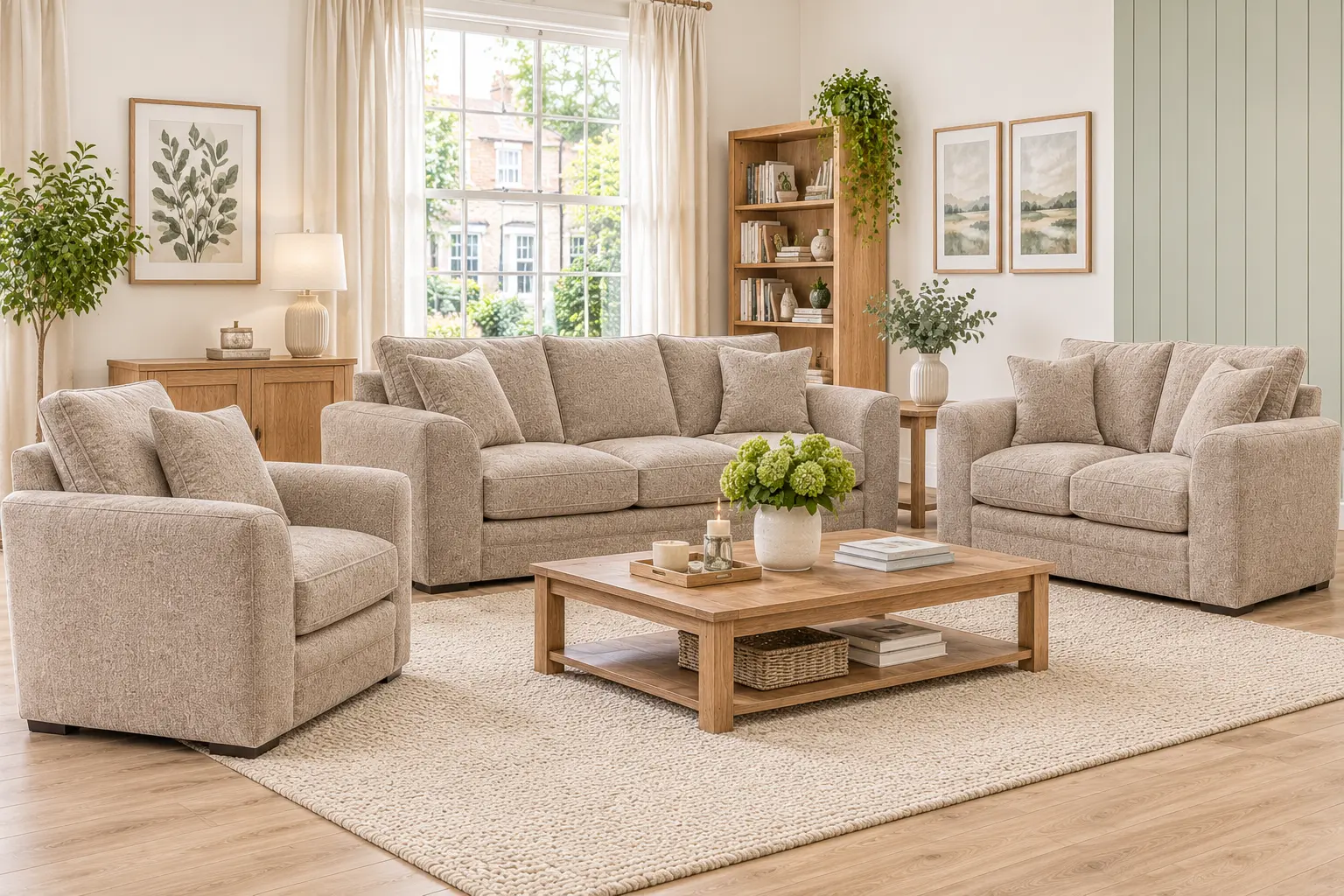
Here is the thing most shoppers get wrong about this bracket: they assume the extra £500 has all gone into making one sofa twice as good. Usually, it has not. It has gone into making the purchase bigger or more versatile.
Look at what actually sits around this price. The Sofya 3+2+1 Seater Sofa Bed Set is £999 — three coordinated pieces, a three-seater, a two-seater and an armchair, with a sofa bed built in. The Aurelia Accent 3+2+1 Sofa Set with Gold Legs is £1,199, just above the bracket. Compare those with the £499 3+2 sets and the pattern is clear: stepping up often means adding the armchair, the bed mechanism, or a more decorative finish, rather than replacing an adequate frame with a better one.
Function is the other thing £1,000 buys. The Electric Recliner Corner Sofa at £950 adds powered reclining — a genuine cost in motors and mechanism, and a genuine benefit if comfort for an older parent or a bad back is the priority. The Black Leather Chesterfield Corner Sofa at £899 brings leather and deep-buttoned styling into a corner layout: a spend on materials and craftsmanship, not size.
So the right question at £1,000 is not “is it worth double?” It is “will I actually use what the extra money buys?” A 3+2+1 set in a small flat is money wasted, however good the value looks on paper. A sofa bed set in a home that hosts family every month is money well spent. This is where many people make mistakes — buying the biggest set the budget allows, then finding the room feels cramped and one piece is never sat on. For a family furnishing a main living room properly, this bracket is the sweet spot.
What £2,000 buys in 2026 — and whether you need it
At £2,000 you are in the territory of designer labels, flagship showrooms, full-grain leather suites and bespoke options. Some of that money buys real things: thicker leather, more complex tailoring, made-to-order sizes and fabrics. If a specific designer shape or a suite built to your exact measurements is what you want, this is the budget that does it.
However, returns diminish quickly. The jump between a well-made £500 sofa and a £1,000 set is noticeable — more seats, more functions, more choice. The jump from £1,000 to £2,000 is mostly felt in the badge, the showroom experience and the finish, not in how the sofa feels at 8pm on a Tuesday.
It is worth saying plainly: in the current Climax Furniture range, you do not reach £2,000 at all. The top of the range sits around £1,199, for a full 3+2+1 set. That is not a criticism of £2,000 sofas — it is a reality check on how much of a higher price is showroom and brand cost that a factory-direct model does not carry.
Think in cost per year, not cost on the day
A small piece of maths changes how most people judge a sofa. A £500 sofa that serves a family well for five years costs £100 a year. A £1,000 set lasting eight to ten years costs roughly the same per year, while seating more people. It is also why frame and filling deserve more attention than fabric colour: colours date, but cushions collapsed by year two cannot be fixed with a throw.
Which budget fits your situation?
Furnishing a first flat or renting? Stay in the £500 band — a £399 three-seater or a £499 corner sofa gives real comfort without money trapped in a room you may leave. Buying the main family sofa, used every evening by children, grandparents and the dog? Treat £500–£1,000 as the working zone, and if you host often, a set with a sofa bed beats one larger sofa. Buying a long-term centrepiece, where a particular leather or recliner function genuinely matters? Then the higher budgets earn their place — as long as you are paying for the feature, not only the name.
Whatever the budget, run the same checks first: measure the room and the doorway, confirm left-hand or right-hand corner, ask what the frame is made from, and read the delivery terms — who assembles it, and when you actually pay.
Before choosing a sofa, consider its fabric, cushion filling, durability and overall build quality, as these factors can make a big difference to long-term comfort and value. For more expert advice, read this Which? sofa buying guide.
Frequently Asked Questions: How Much Should a Sofa Cost UK
What is the average price of a sofa in the UK in 2026?
Most good-quality three-seater and corner sofas fall between £500 and £1,200, depending on size, fabric and whether you buy showroom or factory-direct. Above that, prices usually reflect brand or bespoke options, not basic quality.
Is a £500 sofa good quality?
It can be. Expect a solid frame, deep-filled cushions and durable fabric — complete corner sofas and 3+2 sets are available at £499. Never accept a flimsy frame or thin seat filling, at any price.
Why are some sofas £2,000 if others look the same?
Partly materials — full leather and complex tailoring cost more. Partly everything around the sofa: showroom rent, marketing and overheads. Beyond £1,000–£1,200, extra money is increasingly about brand and finish, not comfort.
How long should a good sofa last?
At least five to eight years in daily family use. If cushions sag inside two years, the cause is usually foam density or frame quality, not how the sofa has been treated.
Should I pay more for a sofa bed?
Only if it will genuinely be slept on. The mechanism adds real cost, so it suits homes without a guest room. A dedicated two-seater sofa bed at around £480 can be smarter than upgrading a whole set.
What hidden costs should I check before buying?
Delivery, assembly, old sofa removal and access. Check whether delivery and assembly are included, whether the sofa comes in sections for narrow doorways, and whether you pay upfront or on delivery.
Conclusion
So, how much should a good sofa cost in the UK in 2026? For most homes, less than the high street would like you to think — and more than the very cheapest listings suggest. Around £500, spent on the right frame, filling and fabric, buys a genuinely good sofa. Around £1,000 buys more seating, a sofa bed or recliner functions, and finishes like leather. At £2,000 you are largely paying for brand, bespoke choices and showroom experience: fair for some buyers, unnecessary for many.
Start with your room measurements and how you actually live, then let the budget follow. Browse the full sofa range, compare the corner sofas if space is the main problem, and look at the sofa beds if guests are. The best-value sofa is rarely the cheapest or the most expensive one in the shop. It is the one that still feels right, in the room it was bought for, several years after the receipt has been thrown away.