

How to Clean & Maintain Fabric and Velvet Sofas: UK Care Guide

So, how do you clean fabric and velvet sofas without damaging the upholstery? The answer depends on the material, the type of stain and the cleaning method you use. There’s nothing quite like the moment you spot a tea ring, food stain or mysterious mark on your favourite sofa and suddenly forget every cleaning trick you’ve ever known.
And velvet makes the situation even more stressful. Rub it too hard and you can disturb the pile. Use the wrong cleaner and you could leave a permanent mark. Get a fabric sofa too wet and you may end up with water marks or a much bigger problem than the original spill.
The good news? Most sofa care is less about aggressive cleaning and more about using the right method at the right time.
A little regular maintenance can stop dust, crumbs and everyday grime from becoming embedded in the upholstery, while quick action can make fresh spills far easier to deal with. The important part is knowing what your particular fabric can tolerate — because a velvet sofa, chenille sofa and tightly woven fabric sofa should not automatically be treated in exactly the same way.
This guide explains how to clean a fabric sofa step by step, how to care for velvet upholstery, what to do about common stains, when not to use water or a vacuum, and when professional upholstery cleaning makes more sense.
How to Clean Fabric and Velvet Sofas Step by Step
For most fabric sofas, the safest starting point is:
- Check the manufacturer’s care instructions.
- Remove loose cushions where possible.
- Brush or gently vacuum away dust and crumbs using a suitable soft attachment.
- Deal with spills immediately by gently blotting rather than rubbing.
- Test any cleaning product on a hidden area first.
- Use only a cleaner suitable for the specific upholstery.
- Avoid soaking the fabric.
- Allow the sofa to dry naturally and completely.
- Plump and rotate reversible cushions regularly to distribute wear.
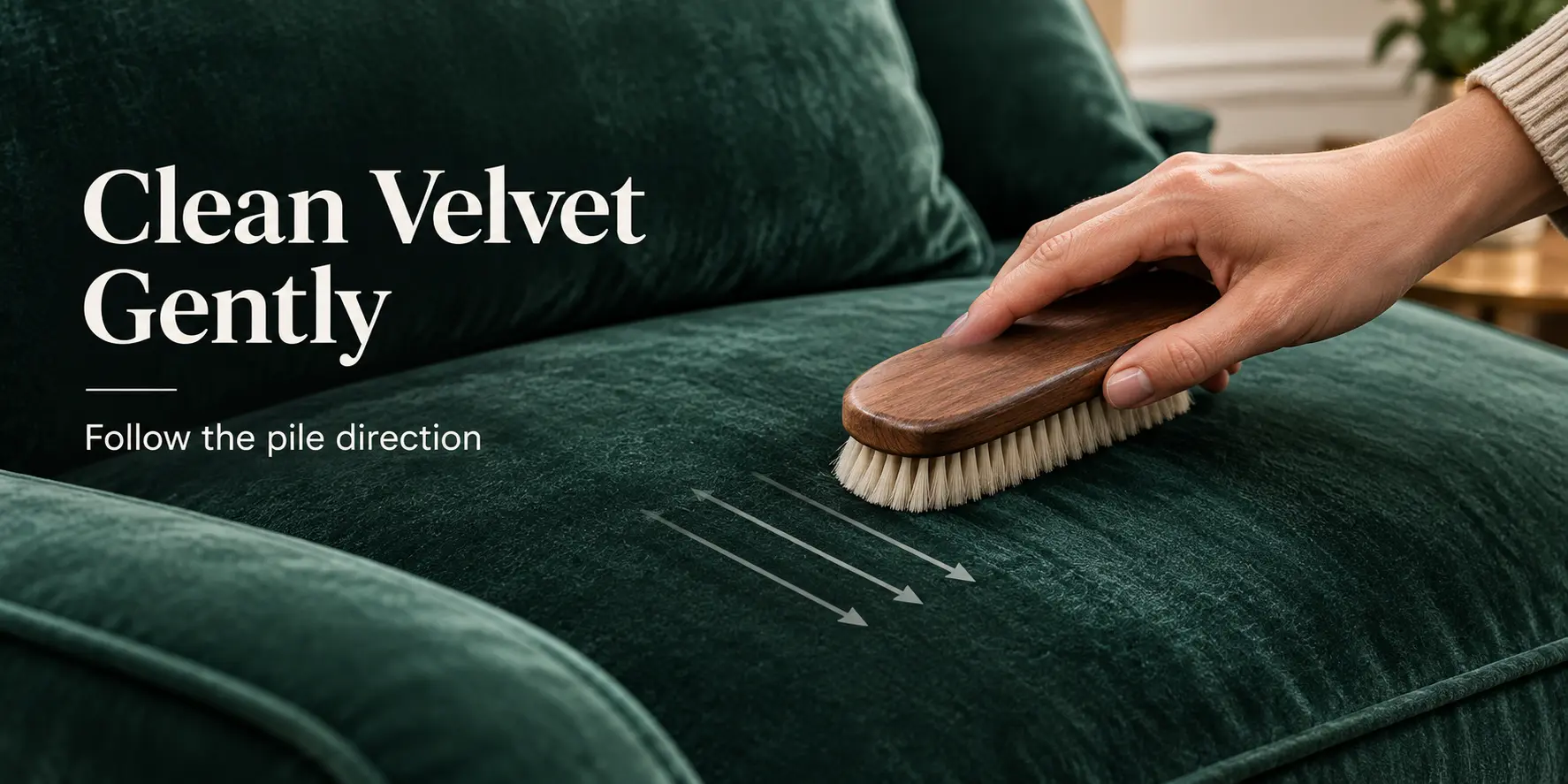
For velvet, take extra care with the pile. Use a soft brush and gentle movements, following the manufacturer’s instructions for the particular velvet. Furniture Village advises lightly vacuuming pile fabrics with a curtain attachment and brushing them in the direction of the pile.
Why Does Sofa Upholstery Get Dirty So Quickly?
Your sofa gets far more abuse than it probably gets credit for.
Everyday use can introduce:
- Dust and household debris
- Food crumbs
- Pet hair
- Body oils
- Clothing dye transfer
- Drink spills
- Grease
- Mud
- Skin and hair products
- Pet-related marks
- General household odours
Over time, this can make upholstery look dull, flattened or patchy even when there is no obvious stain.
High-use areas — particularly the seat cushions, arms and front edges — usually show wear first. Pile fabrics such as velvet can also develop changes in shading or flattened areas because the direction of the fibres changes with use.
Climax Furniture specifically notes that flattening and shading in heavily used pile fabrics such as velvet is an unavoidable characteristic of the material rather than necessarily a manufacturing fault.
That distinction matters.
Not every mark on a sofa is dirt. Sometimes it is simply the way the upholstery fibres respond to pressure and light.
Fabric Sofa vs Velvet Sofa: What Changes?

The basic principles are similar, but velvet needs more careful handling because of its raised pile.
| Feature | Fabric Sofa | Velvet Sofa |
|---|---|---|
| Everyday dusting | Soft brush or suitable low-suction attachment | Soft brush or manufacturer-approved attachment |
| Spill response | Blot promptly | Blot gently without aggressive rubbing |
| Scrubbing | Avoid | Avoid completely |
| Water | Only if permitted by care instructions | Use extreme caution |
| Brushing | Generally suitable with the right brush | Brush gently in relation to the pile |
| Vacuuming | Use appropriate upholstery attachment | Avoid harsh/direct suction |
| Cushion maintenance | Plump and rotate where possible | Regular plumping is particularly useful |
| Deep cleaning | May require professional cleaning | Professional cleaning may be safer |
| Main concern | Staining, fading and general wear | Pile direction, crushing, shading and staining |
The manufacturer’s care instructions should always take priority over generic advice. DFS makes the same point in its upholstery guidance, noting that individual product-care documentation takes precedence over general recommendations.
Before you clean fabric and velvet sofas, it’s important to understand how different upholstery materials perform and what to look for when choosing a sofa. Read our Sofa Buying Guide to learn more about fabrics, durability, cushions and sofa construction.
Before You Clean Your Sofa: Check This First
Before reaching for the spray bottle, stop for 30 seconds.
1. Find the care information
Check:
- The sofa’s product information
- Care label
- Manufacturer’s website
- Original paperwork
- Upholstery specifications
Different fabrics can react very differently to moisture, detergents, heat and friction.
2. Identify the upholstery
It may be:
- Polyester
- Cotton
- Linen
- Chenille
- Velvet
- Microfibre
- Bouclé
- A synthetic blend
- A natural/synthetic mixture
The word “fabric” doesn’t tell you enough to choose a cleaning method.
3. Check whether the covers are actually washable
Removable does not automatically mean machine washable.
Some UK furniture manufacturers specifically warn against machine washing sofa covers because washing can cause shrinkage, colour transfer, shape changes or damage to fire-retardant properties.
So don’t assume a zip means “throw it in the washing machine”.
Best Way to Clean Fabric and Velvet Sofas
Learning how to clean fabric and velvet sofas properly can help prevent stains, fading and unnecessary wear.
How to Clean a Fabric Sofa Step by Step
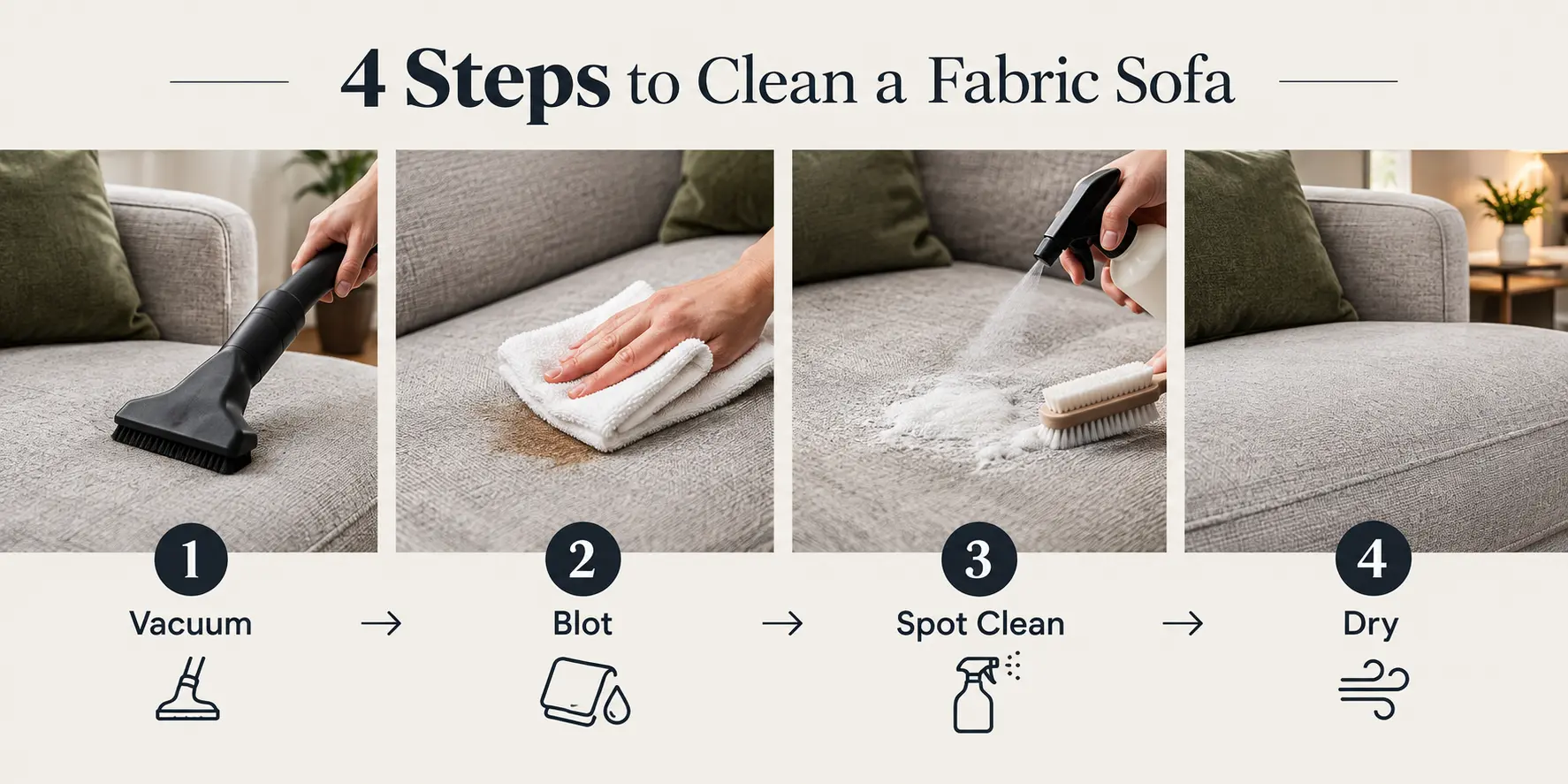
Step 1: Remove Cushions and Loose Debris
Take off removable cushions if the manufacturer’s instructions allow it.
Shake or gently brush away:
- Crumbs
- Dust
- Pet hair
- Loose dirt
- Small particles
Pay particular attention to the gaps between cushions.
This is one of those boring jobs that makes the rest of the cleaning process considerably easier.
Step 2: Vacuum Carefully
If your upholstery instructions permit vacuuming, use an appropriate upholstery or soft-brush attachment.
Keep suction gentle, particularly on delicate or pile fabrics.
Avoid dragging a hard vacuum head across the upholstery.
For velvet and other deep-pile materials, harsh suction can disturb the fibres. DFS recommends using a soft brush or low-suction approach where vacuuming is appropriate.
A useful trick
Instead of attacking the sofa with maximum suction, work slowly across:
- Seat cushions
- Back cushions
- Armrests
- Creases
- Under cushions
- Along seams
You’re removing surface dirt, not trying to excavate the sofa.
Step 3: Brush the Fabric Where Appropriate
A clean, soft upholstery brush can help lift surface dust and refresh the appearance of certain fabrics.
Use gentle strokes rather than aggressive scrubbing.
For velvet, pay attention to the nap or pile direction.
Some velvet fabrics change appearance depending on which way the pile lies. Next’s upholstery guidance recommends gentle spot cleaning for velvet and working with the direction of the pile, followed by careful brushing once dry.
Step 4: Treat Spills Immediately
This is probably the most important sofa-care habit.
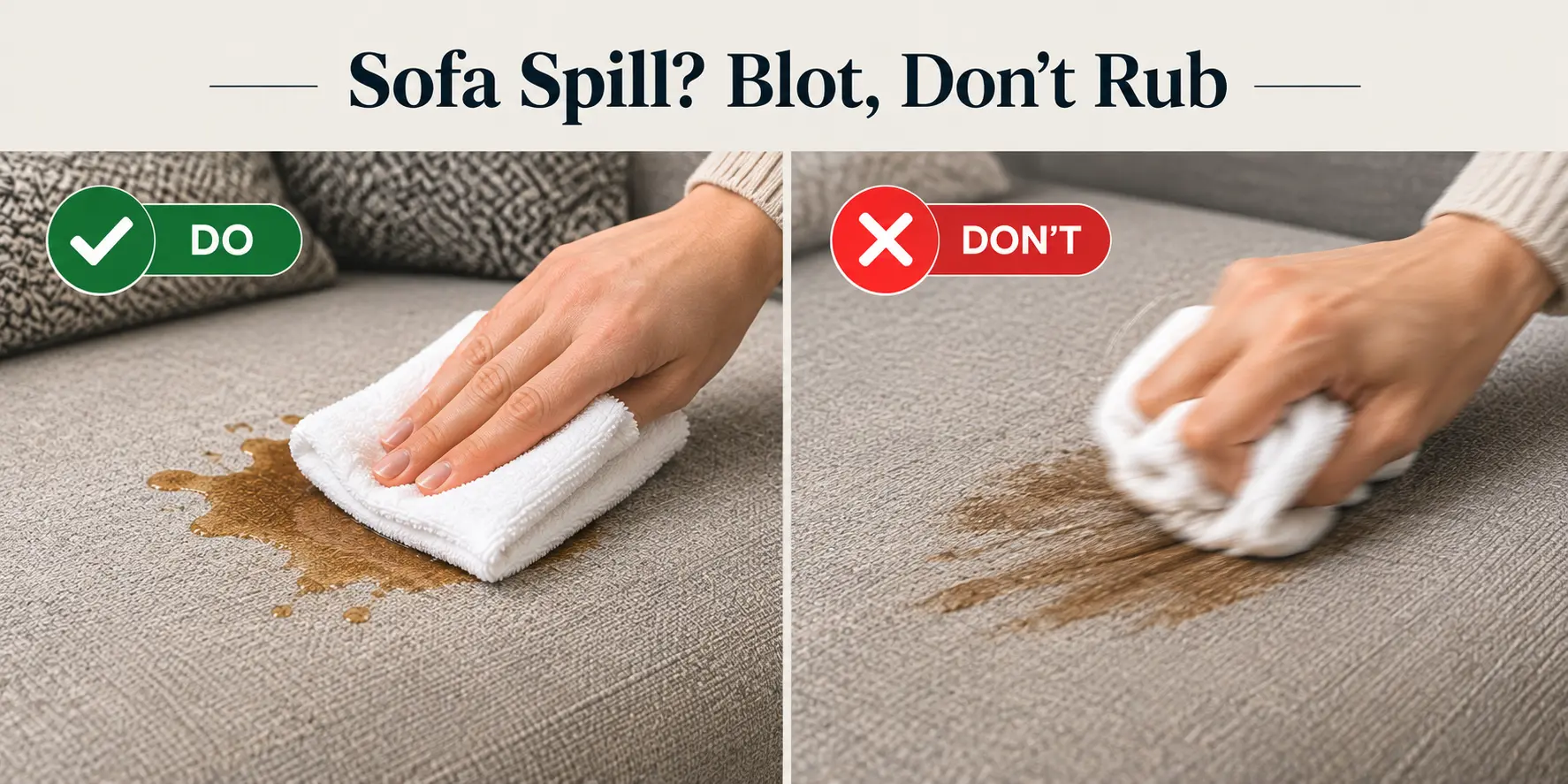
The longer a spill sits, the greater the chance that it will penetrate the upholstery.
For a fresh liquid spill:
- Remove anything solid without spreading it.
- Take a clean, absorbent cloth or paper towel.
- Gently blot the liquid.
- Work from the outside of the affected area towards the centre.
- Replace the cloth as it becomes wet.
- Continue until you have absorbed as much liquid as possible.
- Follow the manufacturer’s recommended stain-treatment method.
Do not scrub.
Rubbing can spread the stain, work it deeper into the fibres and potentially damage the surface.
DFS and Next both recommend prompt blotting rather than rubbing for upholstery spills.
Step 5: Test the Cleaning Product
Never assume that a product labelled “fabric cleaner” is automatically suitable for your sofa.
Before treating a visible area:
Test it somewhere inconspicuous.
For example:
- Behind the sofa
- Under a removable cushion
- On another hidden section recommended by the manufacturer
Check for:
- Colour change
- Bleeding
- Water marks
- Texture changes
- Damage to the pile
- Residue
Next specifically recommends testing stain-removing agents on a hidden section to check colourfastness and potential damage.
Step 6: Clean the Stained Area Gently
If the upholstery instructions allow spot cleaning, apply the approved product carefully.
Don’t flood the fabric.
Use the smallest practical amount of moisture and avoid aggressive friction.
For velvet, the aim is not to flatten, scrub or repeatedly work the pile. The surface should be treated delicately.
Step 7: Let the Sofa Dry Naturally
After spot cleaning, allow the treated area to dry completely.
Avoid applying unnecessary heat.
Do not sit on a heavily damp area simply because it looks nearly dry.
A sofa can feel dry on the surface while retaining moisture deeper within the upholstery.
Once dry, gently restore the fabric or velvet pile if the manufacturer’s instructions recommend brushing.
How to Clean a Velvet Sofa Safely
Velvet deserves its own section because it behaves differently from a flat woven fabric.
Its distinctive appearance comes partly from its pile. Pressure, friction, moisture and the direction of that pile can affect how the surface looks.
For regular velvet sofa care:
- Dust gently and regularly.
- Use a soft brush where appropriate.
- Vacuum only with a suitable low-suction attachment if permitted.
- Deal with spills immediately.
- Avoid aggressive rubbing.
- Avoid stiff brushes.
- Keep the sofa away from prolonged direct sunlight.
- Follow the specific manufacturer’s care instructions.
Furniture Village recommends lightly vacuuming pile fabrics with a curtain attachment and brushing them regularly in the direction of the pile.
What about crushed velvet?
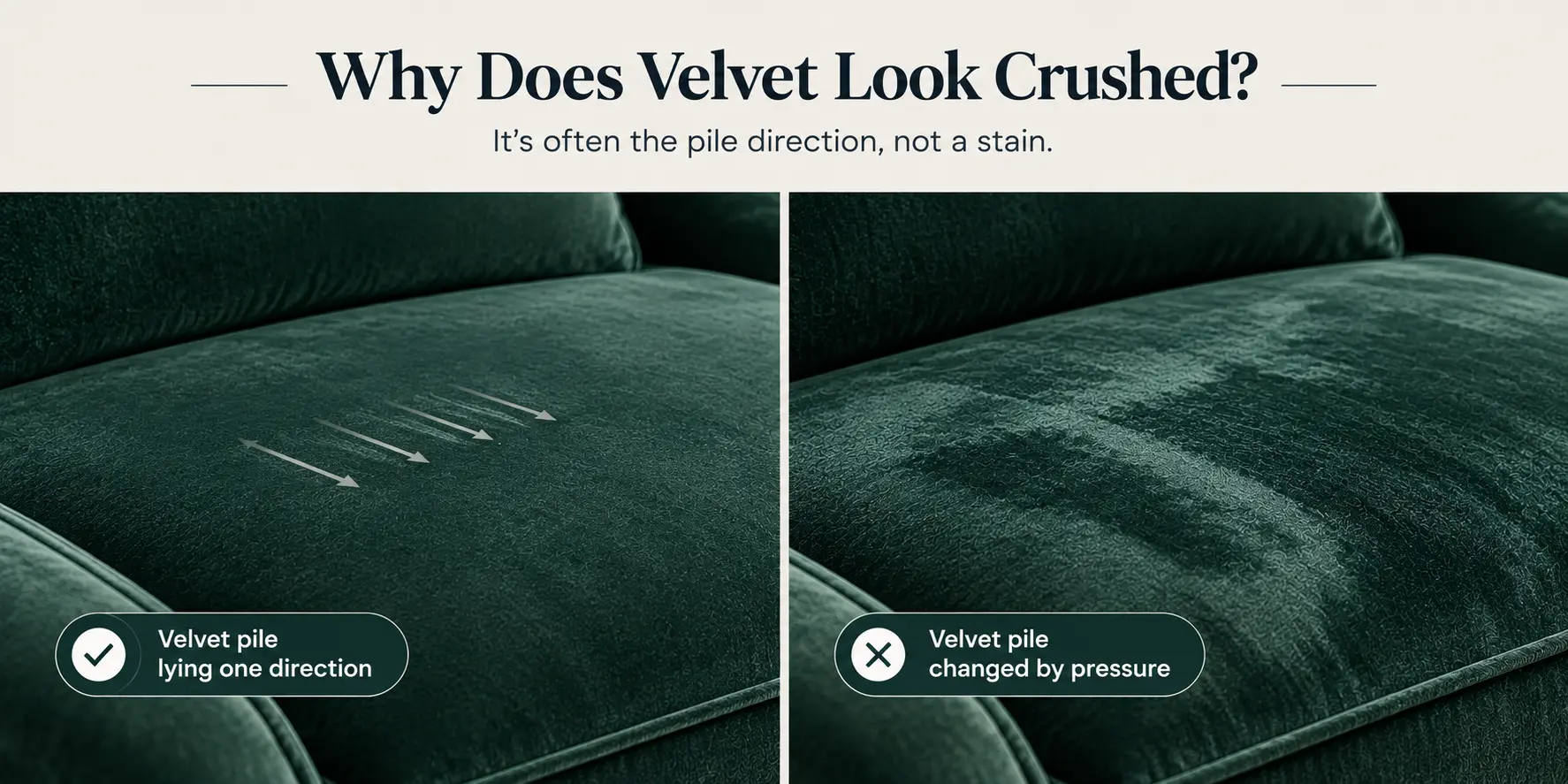
A flattened patch isn’t automatically a stain.
It may be a pile-direction change caused by pressure.
Try gently brushing the pile according to the fabric’s care instructions. Next also notes that velvet, chenille and pile fabrics can develop pile crushing and indentation marks, which may sometimes be improved by softly brushing the pile in the opposite direction to the nap.
Don’t attack it with a hard brush or excessive force.
Velvet is not a carpet. It doesn’t appreciate being treated like one.
Before you clean fabric and velvet sofas, always check the manufacturer’s care instructions.
How to Remove Common Sofa Stains
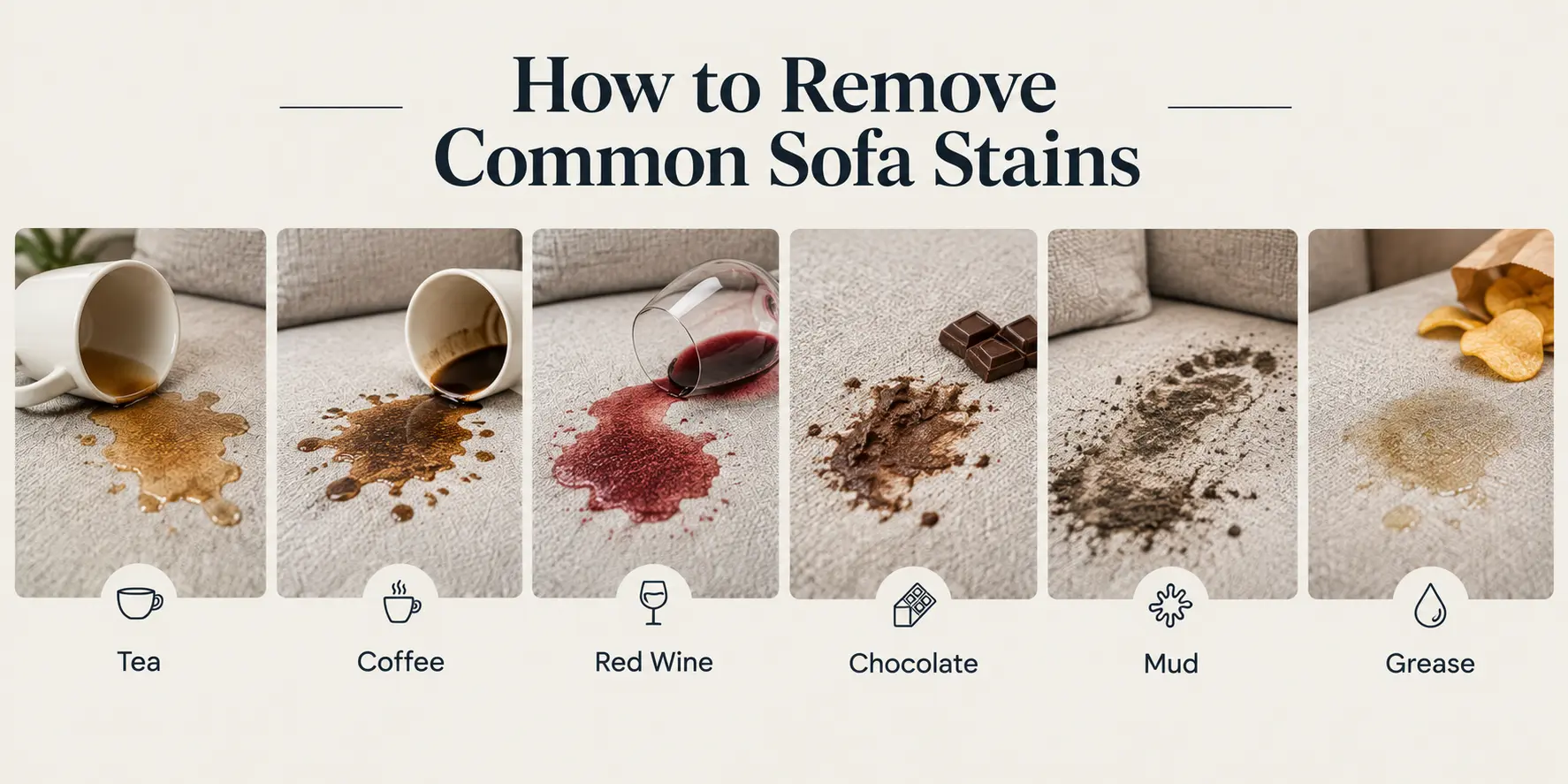
Tea and Coffee
Act quickly.
Blot the liquid with a clean absorbent cloth rather than rubbing it into the upholstery.
Once the excess liquid has been removed, follow the manufacturer’s approved stain-cleaning method.
Do not automatically reach for washing-up liquid or a household cleaner.
Red Wine
Blot immediately and avoid rubbing.
The longer the liquid remains in the upholstery, the harder the stain may become to treat.
If the manufacturer’s care instructions recommend a specific upholstery stain remover, follow those instructions carefully.
Grease and Oily Food
Grease-based stains can be more difficult because they behave differently from water-based spills.
Avoid experimenting with strong household chemicals.
Furniture Village advises professional cleaning for oil- and grease-based stains on some of its upholstered furniture.
Chocolate and Food
If the food is still solid:
- Let it remain firm if possible.
- Gently lift it away using a blunt edge.
- Avoid scraping aggressively.
- Blot any remaining residue.
- Follow the upholstery-specific cleaning instructions.
Never grind food deeper into the fabric while trying to remove it.
Mud
Allow excess mud to dry where appropriate, then gently remove loose particles.
Once the solid dirt has been removed, follow the manufacturer’s cleaning instructions for the remaining mark.
Pet Hair
For pet hair, use a suitable soft upholstery brush, lint-removal tool or manufacturer-approved vacuum attachment.
Be careful with pet claws around upholstery. They can pull threads and damage the fabric surface. DFS specifically warns that pet claws can pull upholstery threads
What Should You Never Use on a Fabric or Velvet Sofa?
Some cleaning mistakes are surprisingly common.
Avoid using:
- Bleach
- Nail varnish remover
- Harsh household cleaners
- Abrasive scourers
- Stiff brushes
- Excessive water
- Unapproved stain removers
- High heat
- Aggressive scrubbing
- Unverified DIY cleaning mixtures
DFS specifically advises against baby wipes, household cleaning wipes, nail varnish remover and general household cleaners on its fabric upholstery, and warns against stiff brushes and scourers.
The bigger lesson is simple:
A sofa is not a test surface for random cleaning hacks from social media.
If you don’t know how the upholstery will react, check first.
Can You Steam Clean a Fabric Sofa?
Not automatically.
Steam cleaning sounds appealing because it promises a deep clean without traditional detergents. But upholstery construction, fabric composition, backing materials and fillings differ between sofas.
DFS does not recommend customers attempt steam cleaning at home because there is no universal method that suits every upholstery fabric.
If your sofa requires a deep clean, check the manufacturer’s guidance and consider a professional upholstery cleaner.
Should You Machine Wash Sofa Covers?
Only if the manufacturer specifically says they are machine washable.
A removable cover is not the same thing as a washable cover.
Machine washing can potentially cause:
- Shrinkage
- Colour bleeding
- Distortion
- Loss of shape
- Damage to the fabric
- Problems with fire-retardant treatment
DFS advises against machine washing its sofa covers, while Next’s furniture instructions also state not to machine wash certain sofa covers.
When in doubt, don’t put it in the washing machine.
How to Maintain a Fabric Sofa Between Deep Cleans
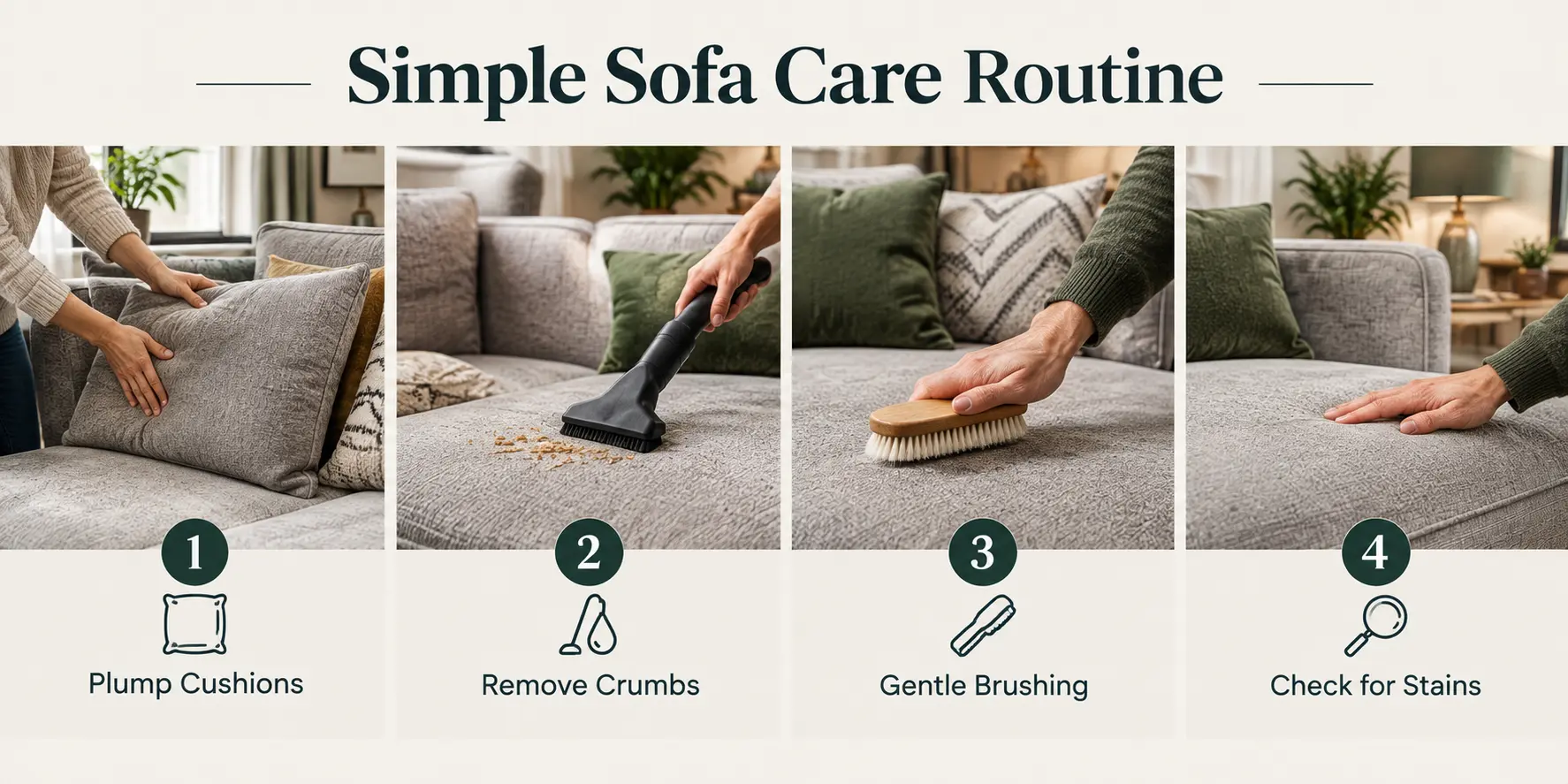
Good sofa care is mostly preventative.
Weekly Sofa Maintenance
Once a week:
- Remove loose crumbs.
- Dust or gently brush the upholstery.
- Clean under cushions.
- Check high-use areas.
- Remove pet hair.
- Check for fresh stains.
- Plump cushions.
- Rotate reversible cushions if permitted.
DFS recommends regular dusting and also advises rotating or flipping suitable reversible seat cushions to distribute wear.
Daily Velvet Maintenance
Velvet may benefit from a little more attention.
Check for:
- Flattened seating areas
- Visible pile direction
- Pressure marks
- Dust
- Small spills
- Clothing dye transfer
Gentle brushing can help keep the pile looking more consistent where the fabric’s care instructions permit it.
Protect Your Sofa From Sunlight
Direct sunlight can gradually fade upholstery.
This is particularly noticeable on darker or richly coloured fabrics.
Try positioning your sofa away from prolonged direct sunlight, or use curtains, blinds or other window treatments when strong sunlight enters the room.
DFS and Furniture Village both highlight prolonged sunlight as a potential cause of fading or colour change.
One more overlooked issue: radiators
Avoid placing upholstery unnecessarily close to strong heat sources.
The goal isn’t to turn your sofa into a baked potato.
Follow the furniture manufacturer’s placement and safety guidance.
Watch Out for Clothing Dye Transfer
Dark clothing, particularly newly purchased garments, can sometimes transfer dye onto lighter upholstery.
DFS specifically warns about dark dyed clothing coming into contact with light-coloured sofas.
If you have a pale cream or beige sofa, this is especially worth remembering.
How Often Should You Clean Your Sofa?
There isn’t one universal schedule for every household.
A practical maintenance routine looks like this:
| Task | Suggested frequency |
|---|---|
| Remove crumbs and surface debris | Several times a week as needed |
| Gentle dusting/brush | Weekly |
| Check for stains | Weekly |
| Plump cushions | Daily or several times a week |
| Rotate reversible cushions | Weekly where appropriate |
| Deal with spills | Immediately |
| Deeper upholstery cleaning | According to fabric and condition |
| Professional deep clean | When required; DFS suggests every 3–5 years as general guidance |
DFS recommends considering a professional deep clean every three to five years.
However, homes with children, pets, frequent entertaining or heavy daily sofa use may need more frequent attention.
When Should You Call a Professional Sofa Cleaner?
DIY cleaning isn’t always the sensible option.
Consider professional upholstery cleaning when:
- The sofa has extensive staining.
- There are large water marks.
- The fabric has absorbed grease.
- You cannot identify the correct cleaning method.
- The upholstery is delicate.
- A previous cleaning attempt has left marks.
- The sofa needs a full deep clean.
- The manufacturer’s instructions recommend professional treatment.
This can be particularly useful for expensive velvet upholstery.
A professional cleaner should be able to assess the fabric and choose an appropriate cleaning method rather than simply applying the same process to every sofa.
A Simple Sofa Cleaning Kit
You don’t need a cupboard full of chemicals.
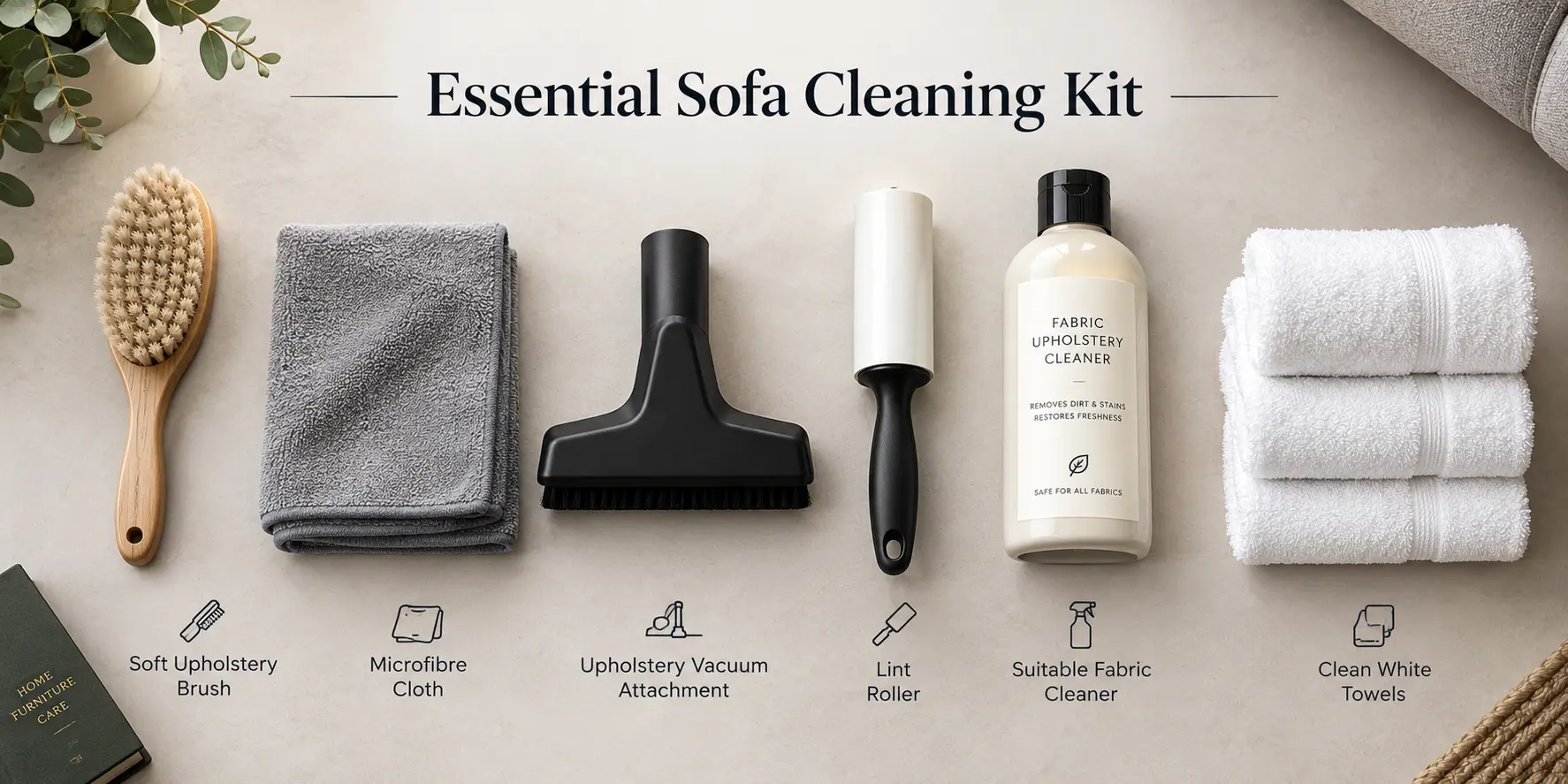
A basic upholstery-care kit can include:
- Clean white or colourfast microfibre cloths
- Soft upholstery brush
- Suitable upholstery attachment
- Low-suction vacuum
- Manufacturer-approved fabric cleaner
- Absorbent paper towels
- Lint roller
- Soft brush specifically suitable for velvet, where recommended
The key isn’t having more products.
It’s using the correct product for the correct upholstery.
The 10-Minute Sofa Care Routine
If you’re short on time, use this quick routine.
Minute 1–2
Remove cushions and loose debris.
Minute 3–4
Brush or gently vacuum the upholstery.
Minute 5–6
Clean under cushions and around seams.
Minute 7
Check for stains or spills.
Minute 8
Treat any fresh marks using the approved method.
Minute 9
Plump cushions.
Minute 10
Smooth the upholstery and restore the pile where appropriate.
Do this consistently and your sofa is far less likely to reach the “I think we need a new one” stage prematurely.
How to Make Your Sofa Last Longer
Cleaning is only part of upholstery care.
Rotate seating positions
If one person always sits in exactly the same place, that section will naturally receive more pressure.
Where the design allows, rotate reversible cushions and vary seating positions.
Plump cushions
Regular plumping can help maintain their appearance and distribute filling.
Keep sharp objects away
Jewellery, buckles, toys and pet claws can snag upholstery.
Next specifically warns against sharp objects around fabric furniture.
Don’t stand on the sofa
Apart from being unsafe, concentrated weight can damage upholstery, cushions and internal components.
Deal with stains early
This is one of the easiest ways to prevent a small accident becoming a permanent-looking feature.
Real-World Example: A Light Fabric Sofa in a Busy Family Home
Imagine a pale beige fabric sofa in a UK family living room.
It gets used every evening. There are children, occasional snacks, muddy shoes coming in from the garden and the odd cup of tea placed on the armrest.
Trying to deep-clean the entire sofa every week would be unrealistic.
A better routine would be:
Daily:
Remove obvious crumbs and deal with fresh spills.
Weekly:
Brush or gently vacuum suitable areas, clean under cushions and plump them.
Monthly:
Inspect high-use areas for marks, pile changes and early staining.
When needed:
Use the manufacturer’s approved stain-treatment method.
Periodically:
Arrange professional upholstery cleaning if the sofa needs a deeper refresh.
The information-gain point here is important: consistent small maintenance is usually more useful than occasional aggressive cleaning.
Fabric Sofa Cleaning Mistakes That Can Cost You
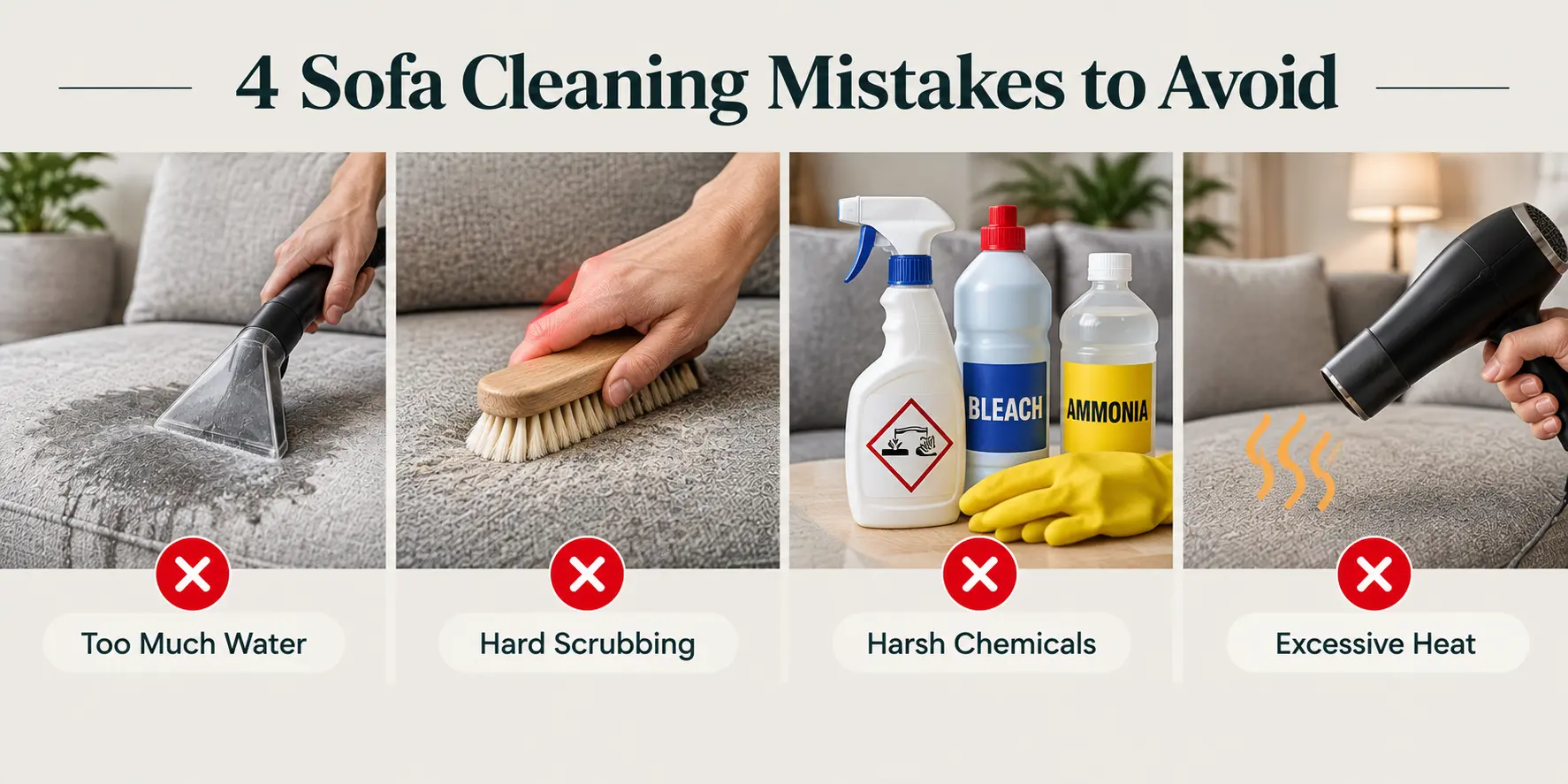
Mistake 1: Rubbing a fresh stain
This can spread the mark and push it further into the upholstery.
Better: blot.
Mistake 2: Using too much water
More water does not automatically mean a cleaner sofa.
Better: follow the upholstery-specific cleaning instructions.
Mistake 3: Using a random household cleaner
A product designed for another surface may damage upholstery.
Better: use an approved product.
Mistake 4: Machine washing removable covers
Removable doesn’t necessarily mean washable.
Better: check the manufacturer’s instructions first.
Mistake 5: Treating velvet like ordinary fabric
Velvet has a pile that can change appearance with pressure and direction.
Better: use gentle, fabric-specific care.
Mistake 6: Ignoring sunlight
A sofa can be perfectly clean and still look faded.
Better: reduce prolonged direct sunlight.
Mistake 7: Waiting until the sofa looks dirty
By then, everyday grime may already be embedded.
Better: maintain it regularly.
Looking for more practical furniture advice? Explore our Blogs for sofa buying tips, interior ideas and furniture care guides.
Frequently Asked Questions
What is the best way to clean a fabric sofa?
Start by checking the manufacturer’s care instructions. Remove loose dirt, gently brush or vacuum where permitted, blot spills promptly and use only a suitable upholstery cleaner that has been tested on an inconspicuous area.
How do you clean a velvet sofa without ruining it?
Use gentle, fabric-specific care. Avoid aggressive rubbing and harsh brushes, and pay attention to the direction of the velvet pile. Follow the manufacturer’s instructions and use a suitable soft brush or low-suction attachment where permitted.
Can I use washing-up liquid to clean my sofa?
Don’t assume it is safe. Some upholstery manufacturers specifically advise against household detergents such as washing-up liquid for certain fabrics. Always follow the care instructions for your particular sofa.
Can I use a normal vacuum cleaner on a velvet sofa?
Only if the manufacturer’s care instructions permit it and you use an appropriate soft or curtain-style attachment with suitable suction. Avoid aggressive direct suction on delicate pile fabrics.
How do I remove water marks from a fabric sofa?
Water marks can be difficult to treat because adding more moisture can sometimes make the affected area larger. Check the manufacturer’s instructions first. If the mark persists, professional upholstery cleaning may be the safer option. DFS recommends professional cleaning for difficult water marks.
Can I steam clean my velvet sofa?
Don’t assume so. Steam cleaning suitability varies between upholstery fabrics and sofa constructions. Check the manufacturer’s instructions or use a professional upholstery cleaning service.
How often should I vacuum my fabric sofa?
Vacuuming frequency depends on the household, fabric and manufacturer’s guidance. Light regular cleaning can help control dust and debris, but delicate fabrics such as velvet should be treated carefully and only vacuumed using an appropriate attachment and suction level where permitted.
How do I stop my velvet sofa looking crushed?
Gently brush the pile according to the manufacturer’s instructions. Changes in pile direction and pressure can create shading or flattened areas that aren’t necessarily stains or defects.
Can I wash removable sofa covers?
Only when the manufacturer explicitly confirms that they are machine washable. A removable cover is not automatically suitable for domestic washing.
When should I professionally clean my sofa?
Professional cleaning is worth considering when your sofa has extensive staining, grease marks, water marks, delicate upholstery or needs a deeper clean than routine spot treatment can provide. DFS gives three to five years as general guidance for professional deep cleaning, although individual circumstances vary.
Final Sofa Care Rule
The safest approach to sofa cleaning is surprisingly simple:
Clean gently, act quickly and always follow the upholstery manufacturer’s instructions.
Fabric and velvet sofas don’t need constant aggressive cleaning. They need consistent care.
Remove dust before it builds up. Deal with spills before they settle. Protect upholstery from excessive sunlight. Treat velvet gently. Rotate and plump cushions where appropriate. And when a stain or deep-cleaning job is beyond what the fabric can safely handle, call a professional rather than experimenting.
A well-maintained sofa doesn’t just look better. It can stay comfortable, presentable and useful for considerably longer.
Not sure how to care for your sofa or need help choosing the right upholstery? Contact Us and our team will be happy to help
And that makes regular sofa care a lot cheaper than replacing the whole thing because of one unfortunate cup of coffee.
Explore Climax Furniture & Connect With Us
Shop Corner Sofas at Climax Furniture | WhatsApp Us: +44 7511 163716
Explore More: www.climaxfurniture.com
Follow Climax Furniture:
Facebook | Instagram | Pinterest | LinkedIn | X (Twitter) | YouTube